The New River Company
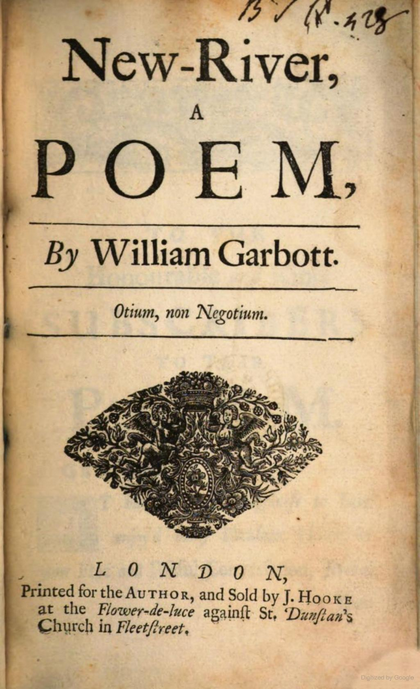
IMMORTAL MIDDLETON! Glory of the Age!
Thou, Thou the wonder shall be, I presage,
Of Future Times, which thou hast made they Own,
By this unequal’d Work which thou hast done.
William Garbott – 1728

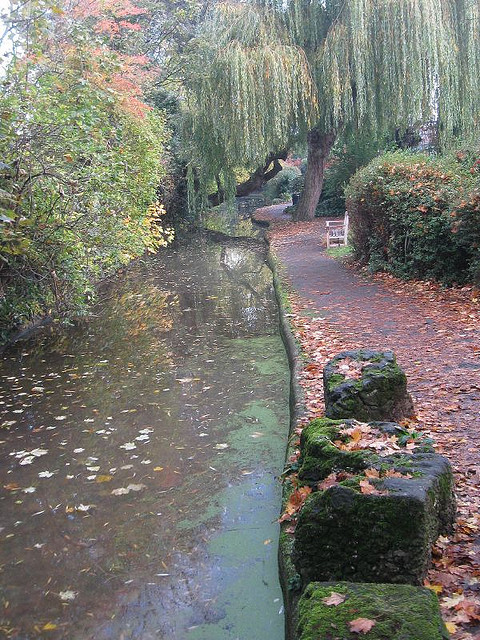
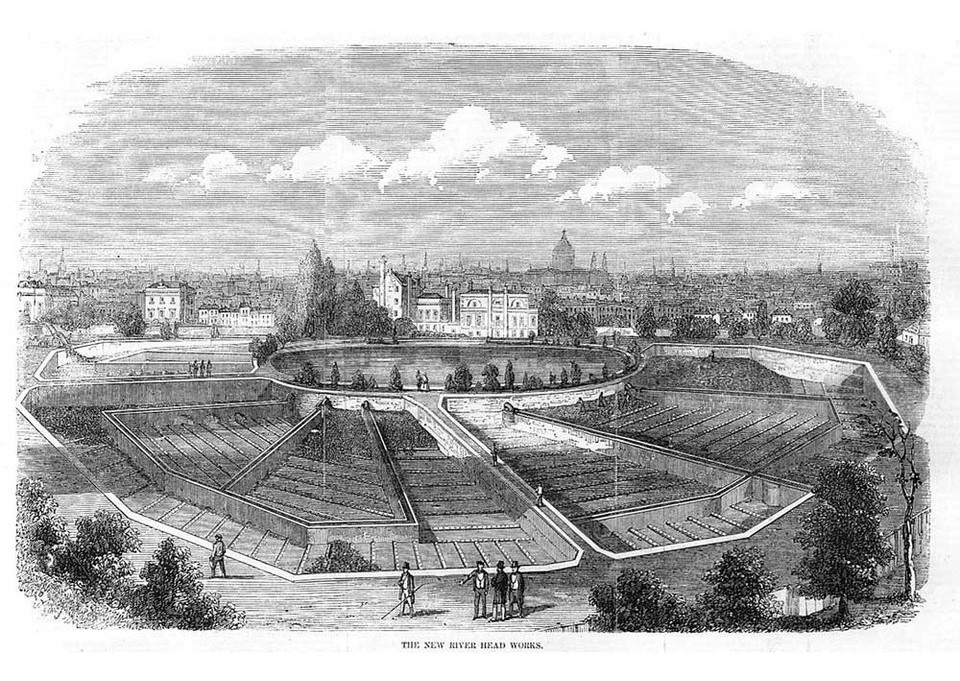
The project called the “New River” was designed to bring fresh water from Hertfordshire to a reservoir, the “New River Head”, in Islington. From there the water was to be delivered via pipes to the city of London and beyond. London was expanding rapidly and the need for clean water was acute. In 1602, Edward Colthurst first put forward plans for such a scheme.
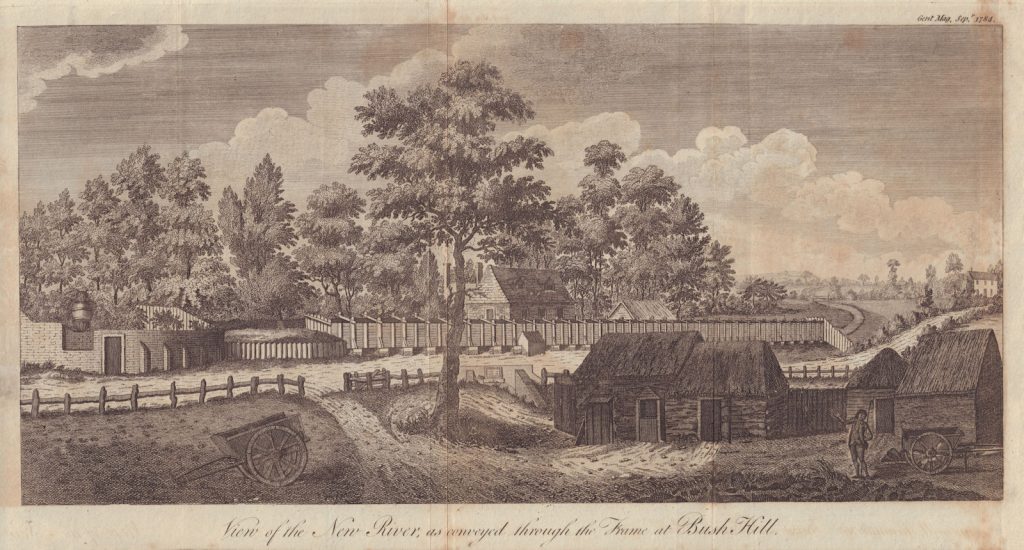
Two years later, King James 1 granted Colthurst a charter for a “new river” to be excavated that brought water from Amwell Spring and Chadwell Spring in Hertfordshire, via a gently sloping gradient following the landscape contours, to London. The New River relied on gravity to allow the water to flow, dropping just five inches per mile. The total route was close to 40 miles while the direct route was just 20. The channel was to be 10 feet wide and 4 feet deep. Colthurst cut just 3 miles and then ran into financial difficulties as well as challenges persuading landowners to let the “new river” pass through their land. The scheme came to a halt.
The New River scheme was revived in 1606. Three years later, Sir Hugh Myddelton MP was engaged by the City of London to complete the project. Colthurst was retained as “resident engineer”, while Myddelton, with his wealth and connections, became project manager. 36 “Adventurers” shares were created to help finance the project.
Problems remained with landowners. This was solved by engaging the King in the project. Myddelton created 36 more shares which were granted to King James 1 – “the King’s moiety” in 1611, giving a total of 72 shares to the company as a whole. The King stood to gain half the profits, but he had no say in the “court of adventurers”.
The whole route was completed and opened in September 1613, to much celebration and fanfare. The great and the good had come from the City of London. Sixty of the labourers processed around the dry excavation that was about to become the Round Pond, carrying spades and shovels. The team involved in construction were in attendance There was a speech, verses were read out, then Anthony Munday records: “the flood gates open, the stream ran gallantly into the cistern, drums and trumpets sounding in triumphal manner; and a brave peal of chambers – small mortars used for firing salutes – gave full issue to the intended entertainment.”
The water was distributed by pipe from the cistern. The pipes were originally made from elm tree trunks that were bored out, later into lead and cast-iron pipes. Householders who could afford it became tenants of the water company and paid for the service.
In 1619, the New River was incorporated into a company: The New River Company. The scheme was slow to deliver profits and in 1630, Charles I sold his 36 shares back to Myddelton in exchange for a £500 annual payment in perpetuity. Years later, this proved to be a myopic decision.
Shareholders were regarded in law as part owners of the land and property that comprised the New River Company. Holders of one or more whole shares could stand for election to the board, could hold office and therefore salaries. Shares could be sold at auction. An Adventure share sold for £3,900 in 1707 but the value climbed to £125,500 by 1889. The average dividend, per share, in the seventeenth century was £265, an income that would put the shareholder in the top 3% of London’s wealthiest residents. By 1883 the dividend had reached £2,560 per share, per annum.
By 1695, the New River Company was one of the three companies with the largest capital in England, the others were the East India Company and the Bank of England. It continued to expand until being brought into public ownership in 1904.
Josias Berners’ four Adventurers shares proved a canny investment in terms of income, dividends were paid twice a year, and rapidly growing capital value. No wonder the Berners family passed them down through the generations for over two hundred years.
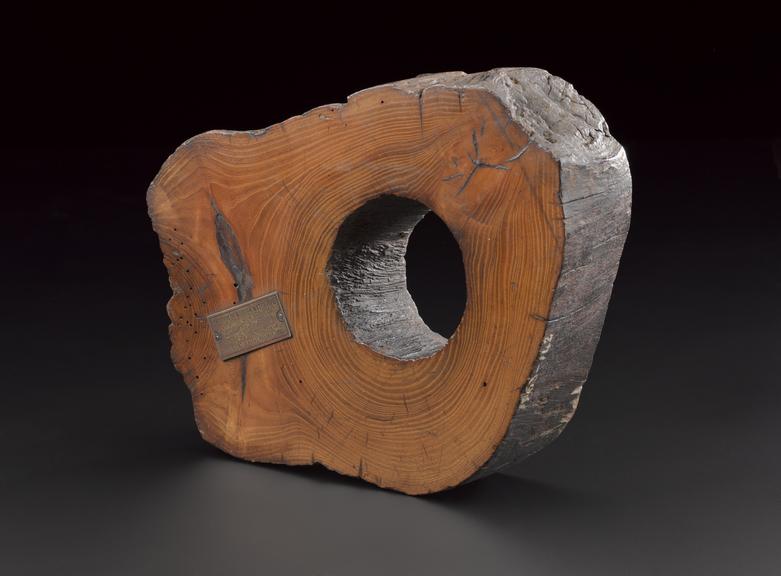
Section of NRC elm pipe